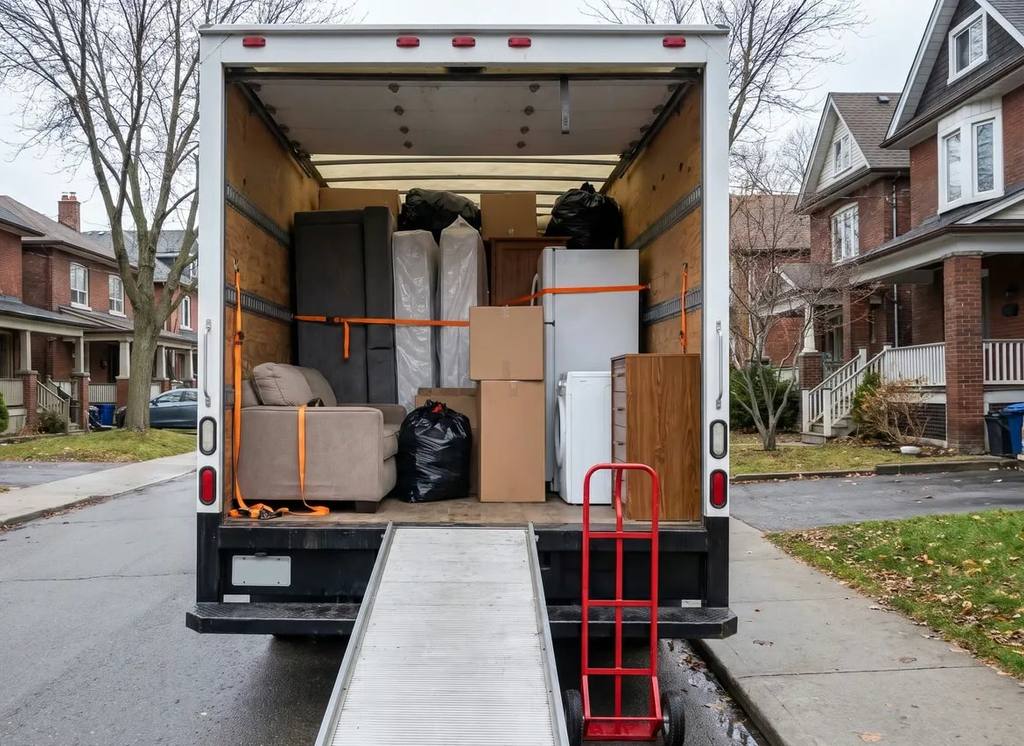
How a Vaughan pickup works
The written quote starts with the items, the access and the date you need the space emptied.
Before the truck arrives
Send the item list
Name the large pieces, estimate the bags or boxes and tell us which rooms they are in.
Describe the access
Include the Vaughan neighbourhood, floor, stairs and where a truck can load.
Receive the written quote
We confirm the agreed items, work, price and date before you book.
Confirm what stays
Identify any furniture, documents or other belongings that must remain.
We carry out the agreed load
We remove the listed items from the house or unit and load them into the truck.
What changes the quote
- Amount
- The number and size of the pieces and how much space the load takes.
- Weight and material
- Tile, stone and wet debris need different handling from empty cardboard boxes.
- Access
- Stairs, tight corners and a long carry from the unit to the loading entrance.
- Extra work
- Furniture that needs dismantling, fixed shelving or an appliance still connected.
- Disposal
- The material types and any disposal or recycling fees for the agreed load.
Choose a loading spot before the visit
Tell us if the driveway is available or send the loading instructions from your building.
Vaughan warns that blocking fire routes or hydrants can result in ticketing or towing.
A short carry does not justify using a fire route as a loading space.
Include any gate, garage height limit or shared driveway in the access description.
Vaughan loading noise restrictions
In residential areas, the noise by-law restricts disturbing loading and unloading noise from 11 p.m. to 7 a.m. and throughout Sundays and statutory holidays.
Send your preferred date and any building loading hours so the pickup can be arranged around the applicable restrictions.
A service elevator reservation does not replace the local noise rules.
Prepare the decisions, access and connections
Mark the items that stay and keep the route to the door accessible.
Tell us about appliance connections so disconnection can be settled before arrival.
For a building, pass on the elevator and loading rules before the date is agreed.
Cleaning is separate from item removal and should be listed in the request if needed.
Sources for this page
Sources checked on 15 November 2026.
Questions about how it works
What is the first step in arranging a Vaughan cleanout?
Name the large pieces, estimate the bags or boxes and tell us which rooms they are in.
Include the Vaughan neighbourhood, floor, stairs and where a truck can load.
We confirm the agreed items, work, price and date before you book.
How is the list of accepted items agreed?
The number and size of the pieces and how much space the load takes.
Tile, stone and wet debris need different handling from empty cardboard boxes.
Stairs, tight corners and a long carry from the unit to the loading entrance.
What happens if access or items change before removal?
Tell us if the driveway is available or send the loading instructions from your building.
Vaughan warns that blocking fire routes or hydrants can result in ticketing or towing.
A short carry does not justify using a fire route as a loading space.
Start with the load and the access
Include the date, floor and nearest Vaughan intersection.